
Home Services Gopher Exclusion in Brighton, CO
Gopher Exclusion in Brighton, CO
Buried wire barriers that stop gophers tunneling into the spots that matter — garden beds, new sod, and young plantings.
Looking for gopher exclusion Brighton? Call (720) 764-0432 and we'll talk through your situation.
What exclusion actually is
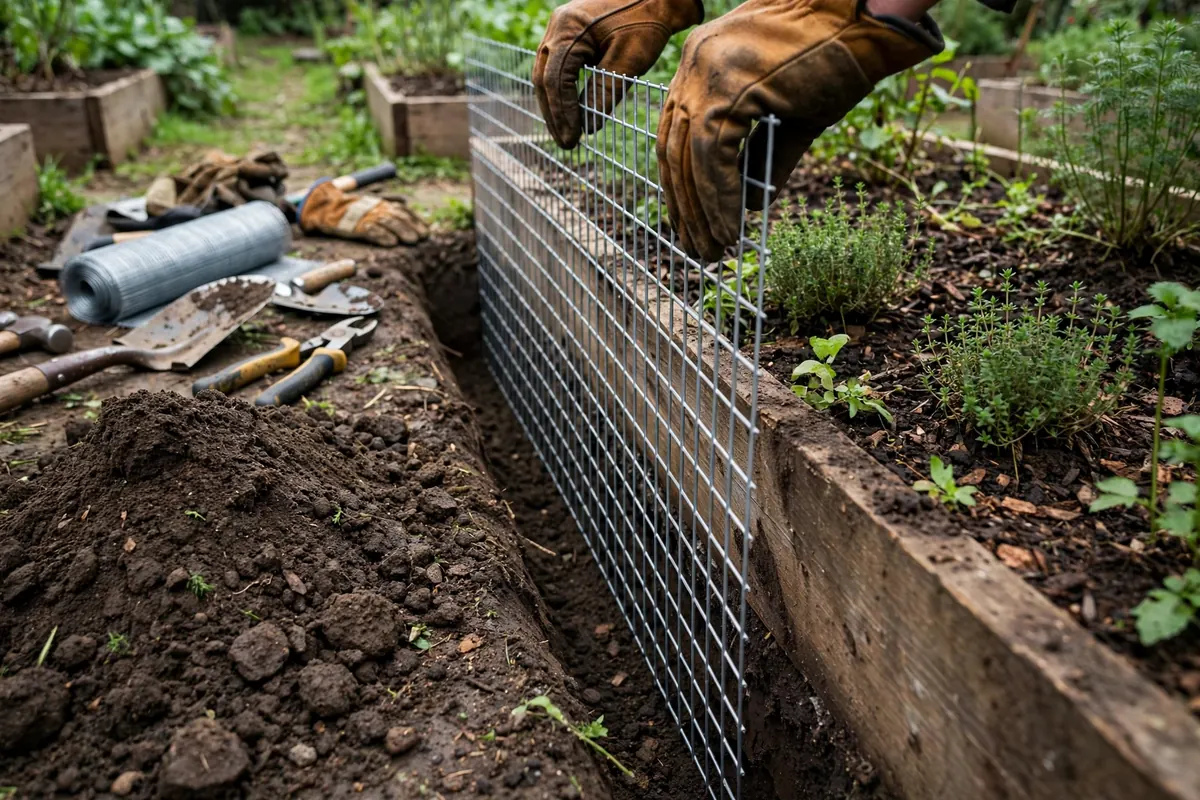
Exclusion means putting something underground that a gopher can't chew or push through. For garden beds, that's galvanized hardware cloth — typically half-inch mesh — buried vertically around the bed, deep enough that the gopher hits wire instead of roots. Individual high-value plants can get their own wire baskets.
It doesn't remove gophers from the property. It protects specific ground. That's an honest distinction: exclusion is a shield for the garden, trapping is the fix for the yard.
Where it makes sense
Vegetable gardens are the classic case — a season of work disappearing underground overnight is exactly what exclusion prevents. It also pays off around new sod installs, young trees, and raised beds. On Brighton's soft soils, where gophers tunnel easily, a buried barrier is often the difference between a garden that survives and one that doesn't.
We'll tell you straight whether your situation calls for exclusion, trapping, or both. Some yards just need the animals out; gardens almost always benefit from the barrier.
How the barrier gets installed
Installation is straightforward but physical. We trench around the perimeter of the bed or planting area, set galvanized hardware cloth vertically in the trench, and backfill. The standard depth is around 18 inches — deep enough that a gopher hitting it turns aside rather than digging under. The top edge sits slightly above grade or folds outward in an L-shape, because gophers also try going over low barriers.
For individual trees or high-value shrubs, we use wire baskets: a cylinder of the same mesh buried around the root ball at planting time. Timing matters here — baskets go in when the plant goes in. Retrofitting a basket around an established tree means disturbing roots, so for existing plantings we usually recommend perimeter barriers or trapping instead.
What exclusion protects — and what it doesn't
Let's be precise, because overselling exclusion helps nobody. A buried barrier protects the ground inside the barrier — the bed, the tree, the sod strip. It does not reduce the gopher population on the property, and it doesn't stop mounds appearing ten feet away on the open lawn. Think of it as a safe room, not a force field.
That's why the honest recommendation is usually both: trapping to clear the current animals, exclusion to protect what matters most going forward. A garden with a barrier and no gophers nearby is about as secure as a garden gets in gopher country.
Combining exclusion with trapping
The one-two approach works like this: first visit, we trap the active tunnel systems across the property and get the population down. Once the digging stops, we install barriers around the beds and plantings worth protecting. Order matters — there's no point burying wire around a bed while a gopher is already living under it.
After both steps, the property is in its best defensible state: no active animals, and the high-value ground is walled off. New gophers wandering in will hit the lawn first (where fresh mounds are easy to spot early) rather than surfacing inside the vegetable bed. That's the whole strategy — make the damage visible early and the valuables hard to reach.
Questions about gopher exclusion in brighton, co
How deep do the barriers go?
Deep enough to matter — around a foot and a half for bed perimeters, following extension guidance. Gophers dig, but they take the path of least resistance, and wire isn't it.
Will exclusion rust away?
Galvanized hardware cloth lasts for years underground. It's the same material extension services recommend, and it holds up in irrigated soil.
Can you exclude a whole yard?
Honestly, no — burying wire around an entire property isn't practical or affordable. Exclusion is for beds, gardens, and plantings. The yard itself gets trapping.
How long does installation take?
Most garden-bed perimeters are a single visit — trench, set wire, backfill. Larger jobs with multiple beds or tree baskets can run longer, but we'll give you a straight timeline when we see the property.
Does the wire affect drainage or roots?
No. Half-inch mesh lets water and fine roots pass freely — it only stops animals. Your beds drain and grow exactly as before; the wire is invisible once backfilled.
What about plants that are already in the ground?
Perimeter barriers work fine around established beds — we trench outside the planting area, so existing roots aren't disturbed. Individual wire baskets are really a at-planting-time solution; for established trees we recommend trapping plus monitoring instead.
Is exclusion a DIY job?
A handy homeowner can do a small raised bed, honestly — the materials are just hardware cloth and a shovel. Where it pays to call us is scale: multiple beds, long perimeters, rocky or compacted soil, or situations where you want the trapping done first so you're not walling gophers in.
Do I need to trap before installing barriers?
Yes — always trap first, then install. Burying wire around a bed that already has a gopher living under it just traps the problem inside the barrier. We clear the tunnels, verify the digging has stopped, and then put the wire in. It's a two-step job in the right order.
Ready to deal with the gopher exclusion in brighton, co?
Call Brighton Gopher Pros at (720) 764-0432 — we'll find the tunnels and handle the rest.